

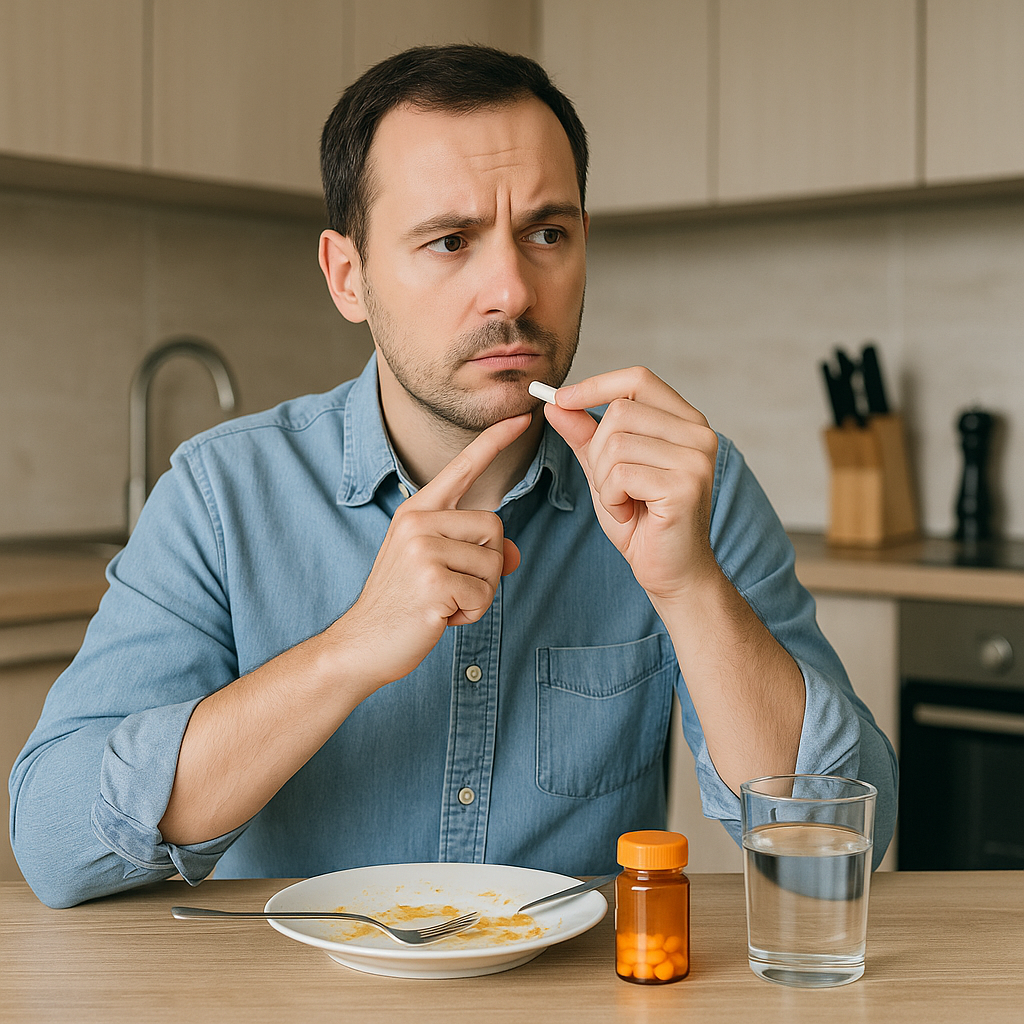
In a world where millions of people depend on prescription and over-the-counter drugs on a daily basis, timing is a crucial but frequently disregarded component of effective treatment, particularly when it comes to meals. Everybody has seen the words “take with food” or “take on an empty stomach” on a prescription container, but what do they actually imply in real life? Is taking a tablet immediately after eating acceptable? Is it better to wait? How long, if at all?
The solution to the seemingly straightforward question of how long to wait before taking medication after eating is surprisingly complicated. It relies on a number of variables, such as the kind of medication you take, how well you digest food, the composition of the meal, and your personal health. A drug’s effectiveness may be diminished or even harmed if this time is not understood. Let’s explore this subject, with a scientific foundation yet a real-world application.
The Significance of Timing: Why It Is Important
Let’s first examine why timing is important in the first place. Your digestive tract is where all medications, including vitamins, antibiotics, and painkillers, start their journey through your body. The speed and effectiveness of that medication’s absorption into your bloodstream can be aided or hindered by food in your stomach.
For instance, in order to improve absorption or lessen gastrointestinal side effects, several drugs require food. Because food can alter their chemical makeup or slow down their absorption, others must be taken empty-handed. Therefore, the timing of your meal in relation to your medication might have a big impact on how well it works.
General Rule of Thumb: The True Meaning of “With Food” and “Empty Stomach”
Let’s make two standard directions clear:
When you take medication with food, you should often eat something right before or right after taking it. For some drugs, a full meal is preferable, but a few nibbles might be sufficient. Either aiding absorption or lessening nausea or gastrointestinal distress are the objectives.
Take the medication on an empty stomach, which usually entails doing so at least an hour before or two hours after eating. This guarantees that there isn’t much food in the stomach and that the medication doesn’t take longer to go to the small intestine.
It’s recommended to consult your pharmacist or healthcare provider if your medicine label isn’t clear or if you’re not sure. Nonetheless, you can manage your regimen more skilfully if you are aware of basic timelines.
How Long Is Enough After a Meal?
How long should you wait to take your prescription after eating, then?
Generally speaking, you should wait at least two hours after eating if your medication is prescribed to be taken on an empty stomach. This facilitates the effective absorption of your medication and allows your stomach adequate time to partially digest the food.
Waiting after eating is usually not necessary if your medication is not food-sensitive or if it is prescribed to be taken with meals. Actually, you can frequently take the medication right before or right after eating. Certain medications, such as iron supplements or ibuprofen, are even better tolerated when taken immediately after meals because they may otherwise upset the stomach.
Types of Medicines and When to Take Them
Let’s see how the type of medication can affect the waiting time:
Certain antibiotics, such as amoxicillin, can be taken either way. For optimal absorption, some medications, such as tetracycline, should be taken empty-handed. For the latter, it’s usually best to wait two hours after eating.
In order to prevent stomach irritation, it is normally recommended to take pain medicines (NSAIDs, such as ibuprofen) with meals. Take them right after or during a meal; there’s no need for you to wait.
For best results, thyroid drugs (such as levothyroxine) should be taken empty-handed, preferably 30 to 60 minutes before breakfast. Food can obstruct absorption, particularly soy or high-fiber foods.
Iron supplements can cause gastrointestinal pain, but they are best absorbed when taken empty. Unless nausea arises, some doctors advise taking them one hour before or two hours after eating. In such case, a light snack may be helpful.
Antacids and acid reducers, such as omeprazole, are typically taken half an hour before meals so that the medication can start working before the acid levels rise during digestion.
The Composition of Meals Matters
Another important factor is the kind of food you consume. For example, eating a lot of fat might cause the stomach to empty more slowly, which prolongs the time it takes for drugs to be absorbed. While fat content may really help some medications, it may also cause delays or reduce the effectiveness of others.
Meals high in fibre, however, have the potential to bind to drugs, particularly minerals like calcium and iron, which might decrease their absorption. Dairy products might also conflict with some antibiotics. Therefore, what you eat has an impact on when you take your medications, not only when you eat.
Personalised Elements: Digestive Health, Age, and Metabolism
Everybody’s body is unique. The length of time you should wait after eating to take your prescription depends on a number of factors, including age, metabolism, gastrointestinal health, and any drugs you are taking.
People with slower digestive systems or older persons, for example, might require a longer interval between meals and taking “empty stomach” drugs. Individualised timing recommendations may also be necessary for those with digestive diseases such as GERD or IBS.
What Happens If You Miss the Perfect Moment?
Life occurs. Perhaps you were advised to wait two hours before taking your medication, but you took it twenty minutes after eating. Now what?
Don’t usually double up to make up for it. It’s best to miss the dose and go back to your usual routine unless the label specifies otherwise. Alternatively, call your doctor if you took the drug too soon after eating and are concerned about absorption; they may change the dosage or timetable.
Consistency is crucial. Taking your prescription every day, even if the timing isn’t ideal, is frequently more crucial than skipping an occasional hour.
Your Friend Is Water
Most drugs should be taken with a full glass of water, about 8 ounces, regardless of when you take them. Water facilitates the faster dissolution and easier passage of tablets into the stomach. Additionally, it lessens the possibility that the pill would irritate your oesophagus.
Coffee, juice, and milk might affect how well drugs are absorbed or metabolised, so avoid drinking them with medications unless specifically instructed.
Does It Matter Whether It’s Morning or Night?
Indeed, certain medications have a circadian sensitivity. For instance, because the liver creates more cholesterol in the evening, statins and other cholesterol-lowering medications are frequently given at night. To prevent midnight potty trips, some medications, such as diuretics, should be given in the morning.
Therefore, be careful not to inadvertently interfere with the intended impact of your prescription when you combine the “before/after meals” advice with the “morning/night” time.
Special Situations: Coated and Extended-Release Pills
To protect the stomach or guarantee gradual absorption over time, some drugs are available in enteric-coated or extended-release (XR) forms. These frequently come with stringent guidelines—usually, don’t chew or crush, and always adhere to the food’s recommendations exactly.
For instance, if consumed on an empty stomach or chewed incorrectly, an extended-release pain reliever may become very strong and release all of its contents too soon.
A Remark Regarding Supplements
Many people believe that taking vitamins and herbal supplements is risk-free. However, time is still important. While some vitamins, such as vitamin C or the B-complex, can be taken on an empty stomach, fat-soluble vitamins (A, D, E, and K) are best absorbed with meals that contain fat.
Additionally, some herbal supplements may interfere with prescription drugs, changing their efficacy or timing. A healthcare professional should always be consulted before combining these.
Conclusion: Ask questions and pay attention to your body.
Although general guidelines provide direction, the ultimate sign is your body. Consult your doctor about changing the timing or formulation of a medication if it makes you feel queasy when taken on an empty stomach. In a similar vein, time may be more important than dosage if a medication doesn’t seem to be working.
Recall that there is no one-size-fits-all approach to drug instructions. Although they are estimates based on clinical data, your preferences, digestion, and lifestyle all affect them. When in doubt, seek advice from your doctor or pharmacist; they are there to assist, not to pass judgement.
Conclusion: Accuracy and Reliability Come Together
In conclusion, the length of time you should wait before taking medication after eating depends on your body, the drug, and the food you’ve consumed. While “with food” drugs can be taken immediately after or during meals, “empty stomach” medications should generally be taken two hours after a meal.
Even the most complicated drug regimens can be controlled with the correct strategy. It takes a little knowledge, a little preparation, and honest communication with medical professionals to make your treatment not just successful but long-lasting.
Disclaimer
This article’s content is meant primarily for general educational and informational purposes; it is not meant to replace expert medical advice, diagnosis, or treatment. If you have any questions about a medical condition, when to take a drug, or any other health-related matter, you should always speak with your doctor, pharmacist, or other trained healthcare professional. Never ignore or put off getting expert medical advice because of anything you’ve read here.