

Getting the Right Diagnosis Is the First Step
Squint eye is one of those conditions that many people notice but don’t always understand. Some think it’s only about appearance, while others believe it will simply correct itself with time. Honestly, that’s not always true. I remember a relative who kept turning his head slightly whenever he looked at something far away. Nobody paid much attention until an eye specialist explained that the eye muscles weren’t working together properly. After getting the right treatment, he said everyday activities like reading road signs and judging distances felt much easier. That made me realize how important early treatment really is.
A squint, also called strabismus, happens when the eyes don’t align in the same direction. One eye may turn inward, outward, upward, or downward, and the condition can affect both children and adults. If ignored, it may interfere with depth perception, binocular vision, and in children, even lead to lazy eye.
Treatment Is Never the Same for Everyone
When people search for squint eye treatment, they sometimes expect one solution that works for everyone. Eye care doesn’t really work like that. Every patient has a different reason for developing a squint, so doctors first perform detailed eye examinations before recommending any treatment.
Depending on the diagnosis, treatment may include prescription glasses, prism lenses, vision therapy, or monitoring in mild cases. If the eye muscles require correction, surgery may be the most suitable option. The main goal is not just to straighten the eyes but also to improve how both eyes work together. Early diagnosis is especially important because it can reduce the risk of long-term vision problems in children.
I usually compare it to tuning a musical instrument. If one string is out of balance, the entire tune sounds off. Our eyes also need proper coordination to produce clear, comfortable vision.
How Surgery Helps Improve Eye Alignment
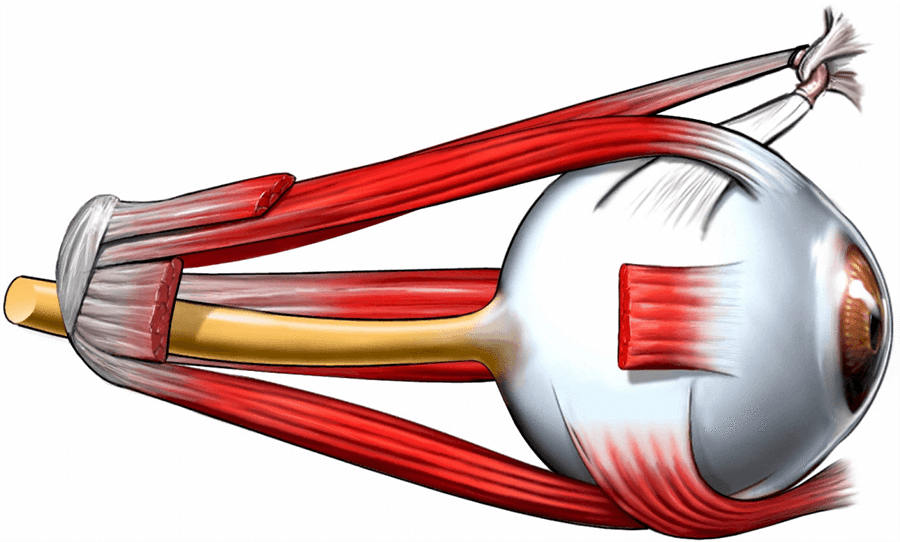
The thought of eye surgery makes almost everyone nervous at first. I completely understand because I used to think eye surgery sounded much scarier than it actually is. Modern squint eye surgery focuses on adjusting the muscles responsible for eye movement so both eyes can align better. The procedure generally takes about one to two hours and is commonly performed as day-care surgery. Children usually receive general anesthesia, while many adults may undergo surgery under local anesthesia depending on their condition. After surgery, patients are usually advised to use prescribed eye drops and attend follow-up visits to monitor healing and alignment.
The aim isn’t only cosmetic. Better eye alignment can improve binocular vision, depth perception, eye coordination, and overall visual comfort in suitable patients.
Why Experienced Eye Care Makes a Difference
One thing I’ve noticed is that people often spend days comparing hospitals online but forget to look at the experience of the specialists. Personally, I think that’s the most important part.
Hospitals such as Sankara Eye Hospital provide comprehensive evaluation, advanced diagnostic facilities, experienced ophthalmologists, and personalized treatment plans for different types of squint conditions. Since every patient’s eye alignment problem is unique, treatment decisions are made only after careful examination rather than following the same approach for everyone.
I’ve also seen more parents becoming aware of childhood eye problems through social media discussions and health awareness campaigns. That’s honestly a good change because children often don’t realize they’re seeing differently and may never complain about it.
Finding Quality Care in India
Searching for Squint eye treatment in India is really about finding experienced specialists who can identify the exact cause of the condition and recommend the most appropriate treatment. Modern eye care in India offers advanced diagnostic techniques, individualized treatment plans, and established surgical procedures that help many patients achieve better eye alignment and improved visual function. Timely intervention also helps reduce the chances of long-term complications and supports healthier vision in both children and adults.
Waiting and hoping the condition disappears on its own isn’t always the best idea. A proper eye examination can provide clear answers and the right treatment plan before the condition begins affecting everyday life even more. Sometimes taking that first appointment feels like a small decision, but it can make a really big difference in how comfortably someone sees the world for years to come.